
Article: How to Clean Leather Shoes? A Step-by-Step Guide
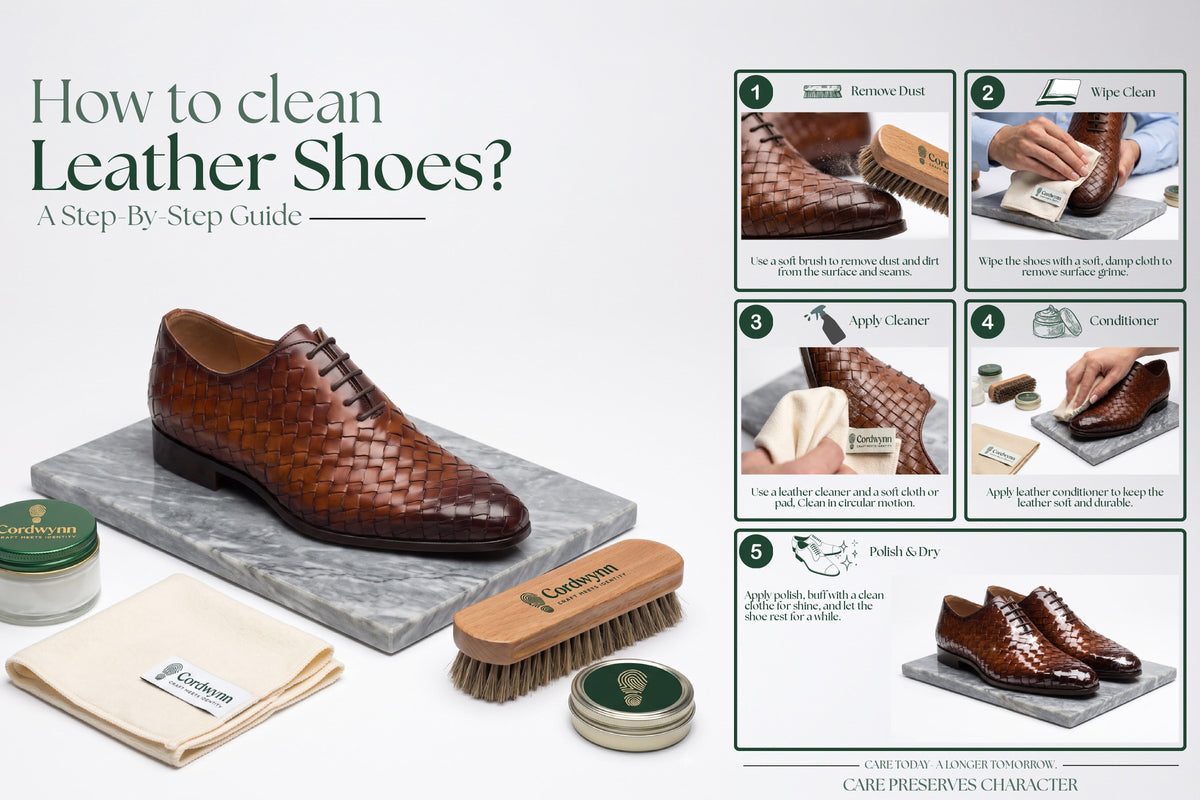
How to Clean Leather Shoes? A Step-by-Step Guide
A good pair of leather shoes can last decades if you take care of them, but most people shorten that lifespan without even realizing it. Wiping off mud with a wet paper towel, letting shoes air-dry next to a radiator, or skipping conditioner for months at a time all seem harmless. Over time, they're exactly what causes leather to crack, stiffen, and lose its shape.
The good news is that cleaning leather shoes properly doesn't take long, and you don't need a professional cobbler kit to do it right. This step-by-step guide walks through exactly how to clean leather shoes safely, how to handle different types of leather, and which common habits you should stop immediately if you want your shoes to actually last.
What You'll Need
Before you start, gather these basics. Most of them are reusable, so this is a one-time investment for years of shoe care.
-
A soft-bristle brush or horsehair shoe brush
-
Two clean, soft cloths (an old cotton t-shirt works fine)
-
A mild leather cleaner or saddle soap
-
Leather conditioner
-
Shoe trees (wooden ones, if possible)
-
Cream or wax polish (optional, for finishing)
-
Lukewarm water
Skip anything abrasive - no scrub brushes meant for dishes, no household cleaning sprays, and no bleach-based products. Leather is a natural material, and harsh chemicals strip its oils faster than daily wear ever would.
Step-by-Step Guide to Cleaning Leather Shoes
Step 1: Remove the Laces and Insert Shoe Trees
Take the laces out completely. It sounds like an unnecessary extra step, but it gives you full access to the tongue and eyelets, where dirt tends to build up unnoticed. If the laces themselves are dirty, hand-wash them separately or swap in a fresh pair.
Insert shoe trees before you start cleaning. This keeps the shoe's shape stable while you're working and, more importantly, while it dries afterward.
Step 2: Brush Off Loose Dirt and Debris
Using a soft-bristle or horsehair brush, go over the entire shoe with short, quick strokes. Focus on seams, welts, and the area around the sole, since dust and grit tend to settle there first. This step matters more than people think - cleaning over loose dirt just grinds it into the leather instead of lifting it off.
Step 3: Clean With a Mild Leather Cleaner or Saddle Soap
Dampen a clean cloth with lukewarm water, then work in a small amount of leather cleaner or saddle soap. Clean in small, circular motions rather than long strokes, and avoid soaking the leather - the goal is a damp cloth, not a wet shoe.
For everyday maintenance, this is often all you need. Save the deeper cleaning methods below for shoes that haven't been cleaned in a while or that have visible stains.
Step 4: Wipe Away Residue
Once you've cleaned the surface, go over the shoe again with a second clean, slightly damp cloth to remove any leftover soap or cleaner. Leaving residue behind can attract dirt faster and interfere with how well the conditioner absorbs later.
Step 5: Let the Shoes Dry Naturally
This is the step most people get wrong. Never place leather shoes near a heater, radiator, or in direct sunlight to speed up drying. Fast, direct heat causes leather to dry unevenly, shrink slightly, and crack over time.
Instead, leave the shoes at room temperature, ideally stuffed with shoe trees or newspaper, and let them air dry for several hours or overnight.
Step 6: Condition the Leather
Once completely dry, apply a leather conditioner using a clean cloth in small circular motions. Conditioning replaces the natural oils that cleaning removes, keeping the leather supple and preventing the kind of dryness that eventually leads to cracking.
This step is easy to skip, but it's the one that actually determines how long your shoes last. A cleaned-but-unconditioned shoe dries out faster than one that's never been cleaned at all.
Step 7: Apply Polish (Optional but Recommended)
If you want your shoes looking sharp - especially formal or wedding leather shoes - finish with a thin layer of cream or wax polish. Cream polish restores color and covers minor scuffs; wax polish adds shine and a bit of extra water resistance. Buff gently with a clean cloth or brush once the polish has had a few minutes to set.
Cleaning Different Types of Leather
Not all leather responds the same way to cleaning, and using the wrong method can permanently damage the finish.
|
Leather Type |
Best Cleaning Method |
Avoid |
|
Smooth full-grain leather |
Saddle soap, then conditioner |
Excess water, harsh solvents |
|
Patent leather |
Damp cloth only, mild soap if needed |
Alcohol-based cleaners, conditioner (can dull the shine) |
|
Suede |
Suede brush, suede eraser for stains |
Water, standard leather cleaner |
|
Nubuck |
Soft brush, specialized nubuck cleaner |
Rubbing too hard, which flattens the nap |
|
Oiled or waxed leather |
Cleaner formulated for oiled leather |
Standard conditioners that alter the finish |
If you're not sure what type of leather your shoes are made from, check with the retailer or brand - using the wrong product on the wrong finish is one of the most common ways people accidentally damage a good pair of shoes.
How to Remove Common Stains From Leather Shoes
Regular cleaning handles dirt and dust, but stains need slightly different treatment.
-
Water stains - Lightly dampen the entire shoe evenly with a cloth, then let it dry naturally. Evening out the moisture prevents a visible ring or watermark.
-
Salt stains (common in winter) - Mix equal parts water and white vinegar, wipe gently over the stain with a cloth, then follow with conditioner once dry.
-
Oil or grease stains - Sprinkle cornstarch or talcum powder over the stain and let it sit for a few hours to absorb the oil, then brush off and clean as usual.
-
Scuff marks - A small amount of matching cream polish, rubbed in gently, usually blends scuffs back into the surrounding leather.
For stubborn or deep stains, it's often safer to use a proper leather cleaner rather than improvising with household products - some common home remedies do more harm than good on genuine leather.
Mistakes to Avoid
A few habits quietly wreck leather shoes faster than normal wear ever would:
-
Using dish soap or laundry detergent - These strip natural oils and can leave leather dry and brittle.
-
Drying shoes near direct heat - Radiators, heaters, and direct sunlight all cause leather to shrink and crack.
-
Skipping conditioner - Cleaning without conditioning removes moisture without replacing it.
-
Wearing the same pair daily - Leather needs at least a day to fully dry out between wears; rotating pairs extends the life of both.
-
Ignoring small stains - Left untreated, minor stains and dryness compound into cracks and discoloration that are much harder to fix later.
How Often Should You Clean Leather Shoes?
There's no single fixed rule, but a reasonable schedule looks like this:
-
Light brushing - After every wear, to remove surface dust.
-
Full cleaning - Every 2 to 4 weeks with regular use, or immediately after exposure to rain, mud, or salt.
-
Conditioning - Roughly once a month, more often in dry or cold climates.
-
Polishing - As needed, especially before formal occasions or when scuffs become visible.
Shoes worn occasionally - like a dedicated pair of wedding leather shoes kept for special events - need less frequent cleaning but still benefit from conditioning every few months to prevent the leather from drying out in storage.
Storing Leather Shoes Properly
Cleaning is only half the equation - how you store shoes between wears matters just as much.
-
Always use shoe trees to help the leather retain its shape and absorb excess moisture.
-
Store shoes in a cool, dry place away from direct sunlight.
-
Avoid airtight plastic bags, which can trap moisture and encourage mold; breathable dust bags work better.
-
Keep leather shoes away from extreme humidity or dryness, both of which accelerate wear.
If you're investing in quality footwear, it's worth pairing that purchase with a proper leather conditioner and care kit rather than treating cleaning as an afterthought. Brands like Cordwynn build their shoes using full-grain leather and traditional construction specifically because it holds up well to consistent care over the long term - but that durability still depends on how the shoes are maintained at home.
Final Thoughts
Cleaning leather shoes isn't complicated, but it does require consistency. Brush regularly, clean without over-soaking, dry away from heat, and never skip the conditioner. Do that, and a well-made pair of leather shoes will genuinely outlast most of what's currently mass-produced and glued together.
If you're shopping for a new pair worth this level of care, it's worth browsing a proper men's leather shoes collection built on construction that's actually designed to last, rather than something that needs replacing within a year regardless of how well you clean it.
FAQ
Q1: Can I use water to clean leather shoes?
Yes, but sparingly. A damp cloth is fine for cleaning; fully soaking leather can cause staining, warping, or cracking once it dries.
Q2: How often should I condition my leather shoes?
Roughly once a month for regularly worn shoes, and more often in dry or cold climates where leather loses moisture faster.
Q3: Is it safe to use household soap on leather shoes?
It's best avoided. Dish soap and laundry detergent are formulated to strip oils and grease, which also strips the natural oils leather needs to stay supple.
Q4: What's the fastest way to dry wet leather shoes without damaging them?
Stuff them with newspaper or shoe trees to absorb moisture, then let them air dry at room temperature. Never use direct heat sources to speed up the process.
Q5: Do suede and nubuck shoes need different cleaning products than smooth leather?
Yes. Suede and nubuck require a specialized brush and eraser rather than standard leather cleaner or conditioner, since moisture and oils damage their texture.