
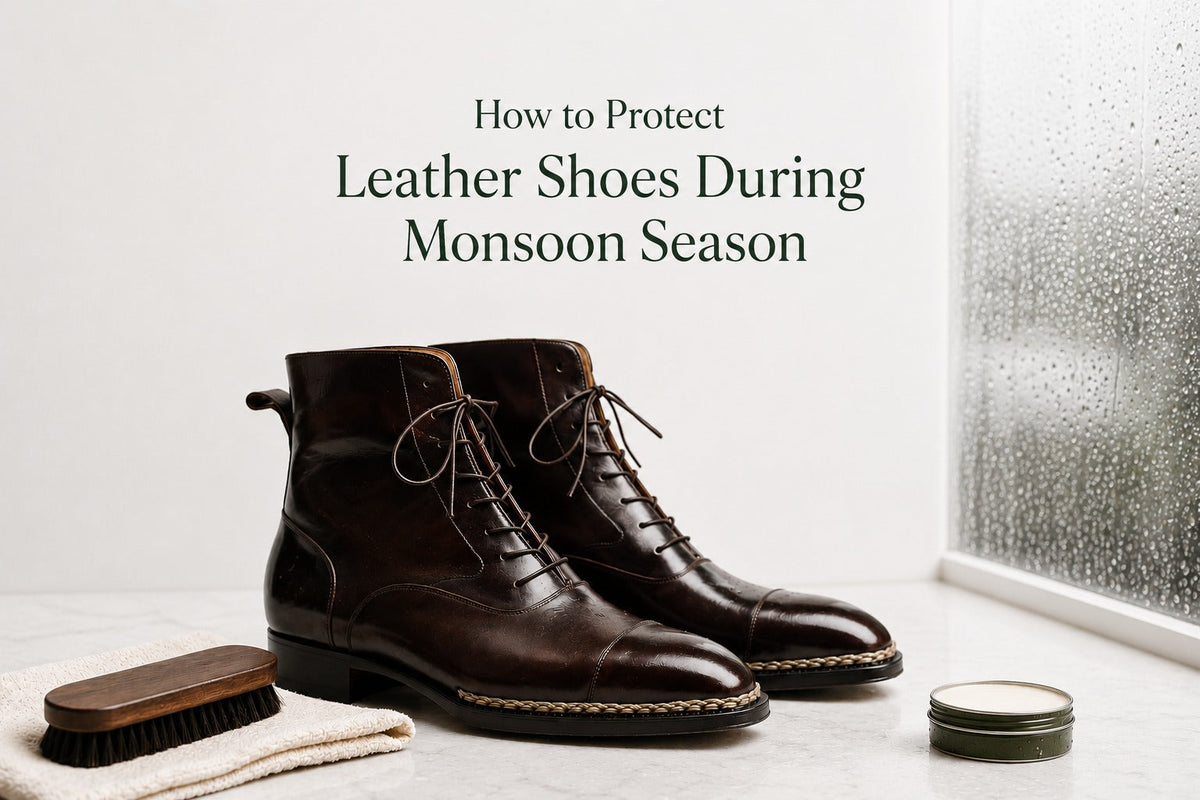
How to Protect Leather Shoes During Monsoon Season
The monsoon can be refreshing, but it can be brutal on your favourite pair of leather shoes. A sudden downpour, muddy streets, damp shoe racks, and high humidity can leave leather looking dull, stained, misshapen, or even cracked.
The good news? You don't have to keep your leather shoes locked away until the rain disappears. With the right routine, leather shoe care during monsoon is surprisingly simple. A little waterproofing before the season, careful drying after a rainy commute, and proper storage can go a long way in keeping your shoes looking sharp.
Whether you wear leather Oxfords to work, loafers on weekends, or boots when the weather turns unpredictable, here's how to protect leather shoes during monsoon season without making shoe care feel like a chore.
Why Is Monsoon Hard on Leather Shoes?
Leather is a natural material, which is one of the reasons a well-made leather shoe develops such a distinctive character over time. But natural leather also needs sensible care when exposed to excess moisture.
During the monsoon, shoes face several problems at once:
-
Rainwater: Prolonged exposure to water can penetrate the leather and affect its appearance and structure.
-
High humidity: Even when shoes don't get soaked, humid air can slow down drying.
-
Mud and grime: Wet dirt can leave stubborn marks and stains.
-
Mould and mildew: Damp shoes stored without enough ventilation create an ideal environment for unwanted growth.
-
Odour: Moisture trapped inside shoes can contribute to unpleasant smells.
-
Repeated wetting and drying: Constant exposure to moisture followed by improper drying can leave leather looking dry or stressed.
This is why monsoon shoe care isn't simply about wiping rain off your shoes. It's about managing moisture from the moment you step inside your home.
How to Protect Leather Shoes During Monsoon
The easiest way to protect your shoes is to think in three stages: prevent, dry, and maintain.
Here's a practical routine you can actually follow.
1. Waterproof Your Leather Shoes Before the Rains
Prevention is much easier than repairing water damage.
Before the monsoon gets into full swing, apply a suitable leather protector or waterproofing product designed specifically for your shoe's leather type. A protective layer can help reduce water absorption and make it easier to deal with dirt and splashes.
However, don't assume that every waterproofing spray works on every type of leather.
Smooth leather, suede, nubuck, and finished leather can require different products. Always check the manufacturer's instructions and test the product on a small, less visible area first.
A good rule: Waterproof your shoes before you need the protection, not after they're already soaked.
2. Don't Ignore the Soles and Edges
When people think about protecting leather shoes from rain, they usually focus on the upper.
But water can also reach the shoe through the sole, welt, seams, and edges.
After walking through puddles, take a moment to inspect the entire shoe. If your shoes have leather soles, be particularly mindful of prolonged exposure to standing water.
For valuable leather footwear, regular inspection is worthwhile. Catching loose edges, worn soles, or damaged seams early can prevent a small issue from becoming an expensive repair.
3. What to Do When Your Leather Shoes Get Wet
Sometimes the rain wins. It happens.
If your leather shoes get wet, don't panic-and don't try to speed things up with extreme heat.
Instead:
-
Remove the shoes as soon as you can.
-
Take out the insoles if they are removable.
-
Gently wipe away surface water with a soft, clean cloth.
-
Open the laces or straps to allow air to reach the interior.
-
Insert shoe trees or loosely stuff the shoes with clean, absorbent paper to help maintain their shape.
-
Leave them in a cool, well-ventilated area.
-
Let them dry naturally before wearing or storing them.
The most important part is patience.
4. Never Dry Wet Leather Shoes With Direct Heat
A wet shoe sitting near a fan or in a naturally ventilated room needs time.
A wet shoe sitting directly under a hair dryer, heater, or intense sunlight is another story.
High, concentrated heat can dry leather too aggressively and may contribute to cracking, stiffness, fading, or changes in shape.
So avoid:
-
Hair dryers
-
Room heaters
-
Hot blowers
-
Direct, harsh sunlight
-
Placing shoes immediately next to a strong heat source
Natural air drying is slower, but it is much kinder to leather.
5. Use Shoe Trees to Maintain Shape
Shoe trees are one of the most useful accessories for people who own quality leather footwear.
They help shoes retain their shape after wear and can also assist with moisture management inside the shoe. Wooden shoe trees are especially useful for regular leather shoe care.
If you don't have shoe trees, clean paper can be used temporarily to help the shoe retain its form while drying.
Avoid overstuffing the shoe. The goal is to support its shape, not stretch the leather.
6. Clean Mud and Dirt as Soon as Possible
Monsoon streets can leave your shoes looking considerably less elegant than they did when you left home.
The temptation is to leave the mud until it dries completely and deal with it later. That's not always the best approach.
Once you're home:
-
Brush or wipe away loose dirt gently.
-
Use a soft cloth for surface grime.
-
Allow the shoe to dry if it is damp.
-
Use a leather-appropriate cleaner when deeper cleaning is necessary.
-
Avoid aggressive scrubbing.
For finished leather, a gentle cleaning routine is generally safer than trying to remove every mark with excessive force.
If you're dealing with an unfamiliar stain, check the care instructions for the specific leather before applying household cleaning solutions.
7. Condition Your Leather Shoes After Cleaning
Here's something many people forget about leather shoe care during monsoon: water protection and leather conditioning are not the same thing.
A protector helps guard the surface against moisture. A conditioner helps maintain the leather's flexibility and finish.
After cleaning and once the shoes are completely dry, apply a suitable leather conditioner when needed.
Don't overdo it. Too much conditioner can leave leather feeling greasy or alter its appearance.
For shoes with a special finish or hand-applied patina, use products that are compatible with that finish and follow the manufacturer's recommendations.
8. Rotate Your Shoes Instead of Wearing One Pair Every Day
Have a favourite pair you wear almost everywhere?
During monsoon, give them a break.
Even if your shoes don't look wet from the outside, moisture from your feet and humid air can remain inside. Wearing the same pair every day doesn't give it enough time to recover.
A simple rotation of two or three pairs can make a noticeable difference.
For example:
Monday: Oxford shoes
Tuesday: Loafers
Wednesday: Oxfords
Thursday: Another pair of loafers or boots
This gives each pair time to air out properly.
It's an easy habit, and your shoes will thank you for it.
9. Store Leather Shoes in a Dry, Ventilated Space
The shoe rack can be just as important as the shoe itself.
A closed, humid cabinet isn't an ideal place for leather footwear during the rainy season.
Instead:
-
Make sure shoes are completely dry before storing them.
-
Keep the storage area reasonably ventilated.
-
Avoid tightly packing pairs together.
-
Use moisture absorbers where appropriate.
-
Don't seal damp shoes inside plastic bags.
-
Keep shoes away from areas with persistent dampness.
Silica gel packets or suitable moisture absorbers can help manage humidity inside a storage area, but they should complement-not replace-proper drying and ventilation.
10. Don't Put Wet Shoes Straight Back in the Shoe Rack
This deserves its own rule:
Wet shoes don't belong in storage.
It might seem harmless to put them away after coming home, especially when you're tired after a long commute.
But trapping moisture inside a closed cabinet can create problems with odour, mould, mildew, and leather deterioration.
Give the shoes time to dry first.
This one small habit can make a significant difference during a long Indian monsoon.
11. Use Shoe Covers When Heavy Rain Is Expected
If you know you'll be walking through heavy rain, a waterproof shoe cover can provide an additional layer of protection.
This is particularly useful when you're wearing formal leather shoes for work, meetings, weddings, or other occasions where changing footwear isn't practical.
Think of shoe covers as an extra line of defence-not a replacement for regular leather care.
12. Pay Attention to the Inside of Your Shoes
Leather shoe care isn't only about the outside.
During monsoon, your feet can sweat more, and moisture can accumulate inside the shoe. This can contribute to odour and create an uncomfortable environment.
To keep the interior fresher:
-
Allow shoes to air out after wearing them.
-
Rotate your footwear.
-
Remove and dry removable insoles.
-
Keep socks clean and dry.
-
Don't store damp footwear immediately after use.
Good footwear hygiene and good shoe care go hand in hand.
A Simple Monsoon Leather Shoe Care Routine
If you don't want to remember twelve different rules, keep it simple.
|
When |
What to Do |
|
Before monsoon |
Apply a suitable leather protector |
|
After wearing |
Air the shoes out |
|
After getting wet |
Wipe, shape, and air dry naturally |
|
After muddy exposure |
Remove dirt gently |
|
After cleaning |
Condition when appropriate |
|
During the week |
Rotate between pairs |
|
Before storage |
Make sure shoes are completely dry |
|
Throughout monsoon |
Check for mould, odour, stains, and damage |
The goal isn't to spend an hour caring for your shoes every evening. It's to build a few small habits that prevent bigger problems later.
Common Mistakes to Avoid During Monsoon
Some shoe-care mistakes are surprisingly common.
Drying Leather Shoes in Direct Sunlight
Sunlight may feel like the obvious solution when everything is wet, but intense direct exposure can affect leather's finish and cause excessive drying.
Using a Hair Dryer
A hair dryer can deliver more heat than leather needs. Natural drying is the safer choice.
Storing Shoes in Plastic
Plastic can trap moisture around the shoe. If the footwear isn't completely dry, this can make the storage environment even less friendly to leather.
Scrubbing Away Stains Aggressively
A stubborn stain doesn't necessarily need more force. Excessive rubbing can damage the finish.
Wearing the Same Shoes Every Day
Even if your shoes appear fine, they benefit from time between wears.
Applying Random Household Products
Leather isn't a material to experiment on casually. Household cleaners, oils, or DIY remedies can sometimes darken, stain, or damage the finish.
When in doubt, use a product specifically made for the leather type.
Can You Wear Leather Shoes During Monsoon?
Yes-you can.
The idea that leather shoes must be completely avoided throughout the rainy season is too simplistic.
The better approach is to understand when and where you're wearing them.
For a short commute from a car to an office, properly protected leather shoes may be perfectly practical. For walking through waterlogged streets or standing in heavy rain for an extended period, a more weather-appropriate pair is the smarter choice.
In other words, protect your leather shoes, but also choose the right footwear for the conditions.
What About Premium Leather Shoes?
Premium leather deserves more attention, not less.
A well-made pair can be a long-term part of your wardrobe, and proper maintenance helps preserve both its appearance and functionality.
This is especially important for handcrafted footwear, where the leather, finishing, construction, and shape are all part of the character of the shoe.
At Cordwynn,the emphasis is on shoemaking, carefully selected leather, in-house craftsmanship, and construction intended for long-term wear. That makes good aftercare an important part of getting the most from the shoes.
A quality pair shouldn't be treated as disposable footwear. With sensible care, it can become better with age.
A 5-Minute Monsoon Check for Your Shoes
Don't have time for a complete shoe-care session?
Do this instead:
1. Look: Check for water marks, mud, cracks, or unusual discolouration.
2. Feel: Is the leather unusually stiff or dry?
3. Smell: Any persistent damp or musty odour?
4. Inside: Does the lining or insole still feel damp?
5. Store: Only put the shoes away once they're properly dry.
Five minutes of attention today can save you from a much bigger shoe-care problem later.
Conclusion: Protect Your Leather Shoes This Monsoon
Knowing how to protect leather shoes during monsoon doesn't require an elaborate routine. The basics are straightforward: protect the leather before heavy rain, clean off dirt promptly, dry wet shoes naturally, condition the leather when necessary, rotate your footwear, and store every pair in a dry, ventilated environment.
Most importantly, don't wait until your favourite shoes show cracks, mould, or permanent stains before you start caring for them.
A little attention during the rainy season can help your leather shoes stay comfortable, presentable, and ready to wear long after the monsoon is over.
For a well-made pair of leather shoes, that's a worthwhile investment of time.
FAQ: Leather Shoes and Monsoon Care
1. Can leather shoes be worn during the monsoon?
Yes. Leather shoes can be worn during monsoon when conditions are suitable and the shoes are properly protected and maintained. Avoid prolonged exposure to standing water and heavy rain whenever possible.
2. What should I do if my leather shoes get completely wet?
Remove surface water with a soft cloth, take out the insoles if possible, support the shoe's shape with shoe trees or clean paper, and let the shoes air dry naturally in a well-ventilated area. Avoid direct heat.
3. How can I prevent mould on leather shoes during monsoon?
Keep shoes completely dry before storage, provide adequate ventilation, rotate footwear, and manage humidity in the storage area. Never seal damp shoes inside plastic.
4. Should I condition leather shoes during monsoon?
Yes, conditioning can help maintain the leather after cleaning and drying. However, use a conditioner suitable for the specific leather and follow the manufacturer's care instructions.
5. Can I dry leather shoes in direct sunlight?
It is better to avoid intense, prolonged direct sunlight. Allow wet leather shoes to dry naturally in a cool, ventilated space instead.